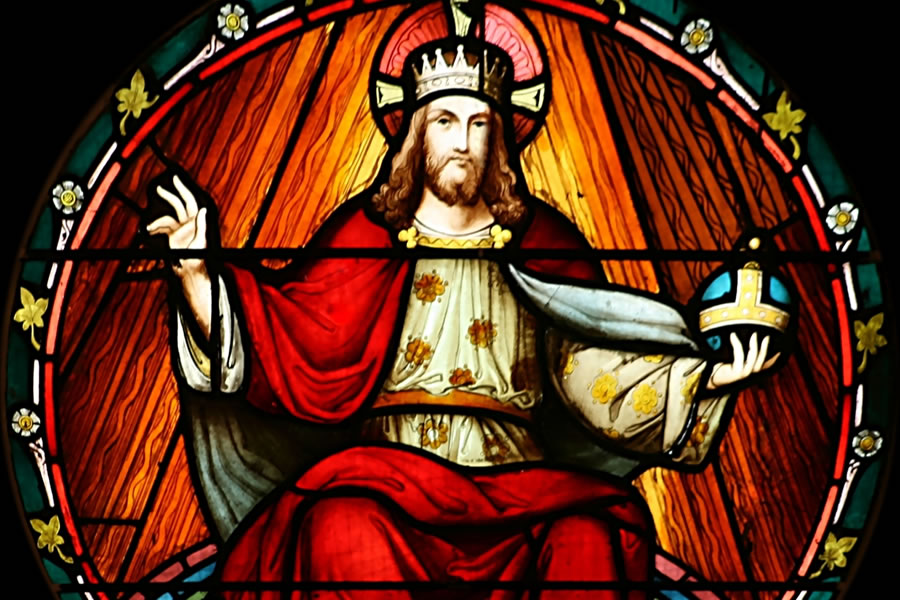
Why the Church Celebrates Christ the King
by Joseph Langenbach | 11/22/2026 | ReflectionsThe History and Meaning
In 1925, Pope Pius XI established the Feast of Christ the King through his encyclical Quas Primas. Europe was still recovering from the devastation of World War I.
Political unrest, growing secularism, and the rejection of religious authority troubled the Church. The Pope saw a pressing need to remind the world that lasting peace could not be separated from Jesus Christ.
His message was not that Jesus belonged to one country, political party, or earthly government. Christ's kingship reaches beyond national borders and human institutions. As the eternal Son of God and Redeemer of humanity, He holds authority over all creation. His reign calls every person to recognize the dignity of others and the demands of truth and justice.
Originally celebrated on the final Sunday of October, the feast was later moved in the Roman calendar to the last Sunday of the liturgical year. Its present place offers a fitting conclusion to the Church's annual journey through the mysteries of Christ's life, death, and Resurrection.
The solemnity also looks forward. The Church proclaims that the risen Lord already reigns, yet His kingdom will be revealed in fullness when He returns in glory. Earthly powers rise and fall, but His authority does not expire. Christ is the beginning and the end of history, the source of our salvation and the fulfillment of our hope for all people.
On this solemnity, we proclaim a truth larger than any nation or age: Jesus Christ is Lord, and His kingdom will have no end.
The Kingdom and Our Lives
What makes Christ's kingdom different from the kingdoms of this world? Earthly rulers often display their power through wealth and armies. Jesus reveals His authority through humility, mercy, and self-giving love. His crown of thorns and His Cross show that divine kingship is inseparable from sacrifice.
The Church does not teach that Christ's kingdom is an inward feeling or private preference. His Gospel has consequences for daily life. Families, communities, and societies are called to honor human dignity, defend the vulnerable, seek justice, and pursue peace. Yet God's kingdom cannot be reduced to a political movement or achieved by human effort. It begins with grace and calls for our free response.
On Christ the King Sunday, Matthew's Gospel presents the Son of Man seated in glory, judging the nations. The measure He describes is concrete: feeding the hungry, welcoming the stranger, caring for the sick, and visiting prisoners. These works of mercy reveal whether love of Christ has taken root in our hearts.
This solemnity therefore asks more than admiration for a title. It invites conversion. We honor our King when we worship faithfully, receive His mercy in the sacraments, forgive our neighbors, and recognize His presence in those suffering. None of these acts earns salvation apart from God's grace; they are fruits of faith working through love.
As the liturgical year closes, may we place our hope not in passing power, but in the eternal reign of Christ, whose kingdom is truth and life, holiness and grace, justice, love, and peace — a kingdom without end.